Why traditional structures stop holding work together
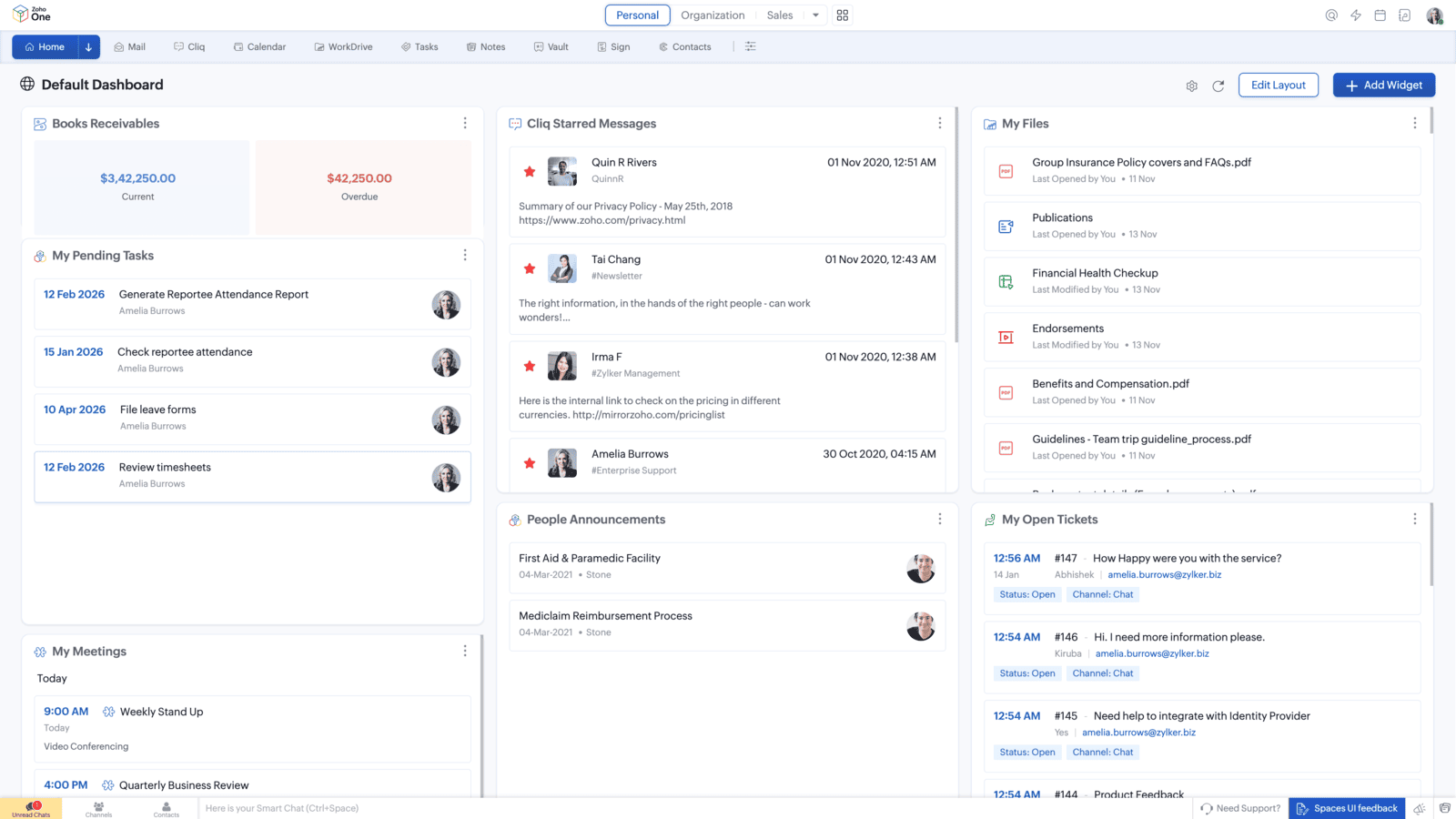
Most software systems still organize work around applications, folders, or projects. Each of these structures serves a specific purpose, but they were not designed to hold everything that accumulates as work spans multiple tools and participants Applications are built around functionality, folders are optimized for storing files, and projects are typically scoped around timelines. As work evolves, conversations, decisions, data, and follow-ups begin to spread across these structures, making it harder to see the full picture in one place.
Organizing work around purpose, not tools
Spaces introduce a higher-level organizational layer that groups apps and tools around zones of focus, rather than around products or menus.Instead of navigating a long list of applications, users enter Spaces that correspond to how work is structured in practice. Each Space creates a bounded environment where related work is brought together intentionally, making scope and ownership easier to understand. Work is no longer arranged primarily by tool category. It is grouped by purpose, with structure emerging from how work is actually done.